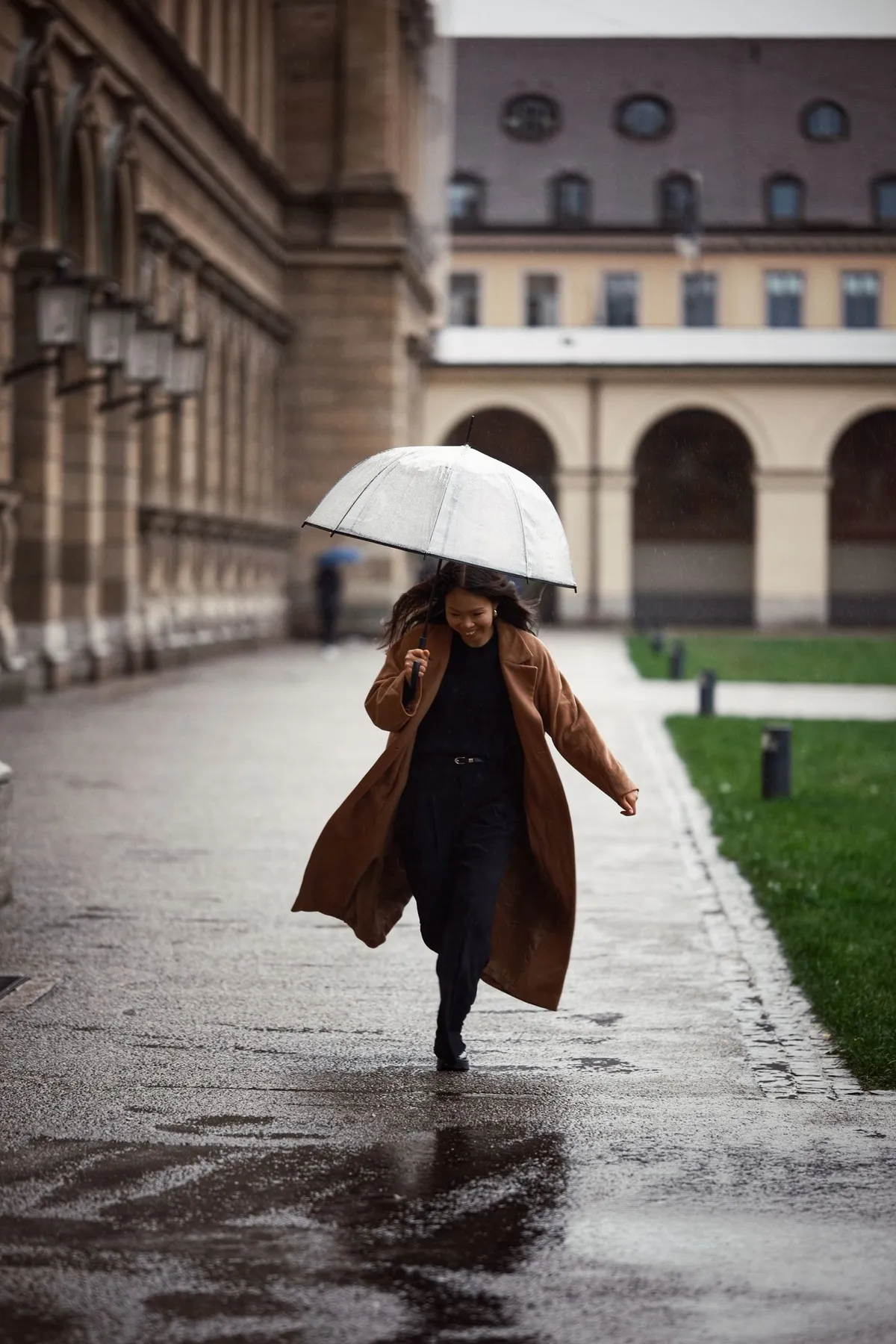
A compact umbrella is useful only if it is carried and straightforward to operate. A very small folded size can be appealing, but opening, grip, coverage and drying are part of the same decision. Start with the bag used for ordinary errands and the length of the walk. You do not need the largest canopy or most elaborate mechanism for every route, but you do need a realistic plan for using it.
Measure the folded space
Check length and width against the actual bag compartment, leaving room for the other essentials. A stated compact size can still be awkward when the handle projects or the case catches at a narrow opening. Try removing and replacing it where permitted. If it only fits when the bag is emptied, the umbrella may remain at home on the very days it was bought for.
Test the mechanism safely
Open and close it in an appropriate clear space according to the maker's directions. Check buttons, hand clearance and the effort required. An automatic mechanism can be convenient, while a manual one offers a different operation. Neither is inherently better. The useful version is the one you can control comfortably without trapping fingers or needing several attempts during an ordinary doorway transition.
Compare coverage with carrying weight
A larger canopy offers more area, but usually changes folded size, weight or handling. A compact one may be easier to carry yet leave more of a coat or bag exposed. Decide according to the actual route and weather rather than assuming a small umbrella replaces suitable outerwear. Check any maker guidance about conditions and do not treat promotional strength language as permission to use it beyond its design.
Include the bag and other hand tasks
Try holding the umbrella while carrying the usual load. Check handle comfort and whether a shoulder strap slips. You may need one hand for a rail, door or another task, so the rest of the carrying setup matters. A lighter bag load or a better strap arrangement can help more than another umbrella feature. Avoid attaching it in a way that creates a hazard or obstructs others.
If the wind becomes unsuitable
Seek appropriate shelter and follow the maker's guidance rather than forcing the frame to stay open. A damaged rib or unreliable closure needs assessment before reuse. Do not treat a repeatedly inverted or broken umbrella as a normal item to pack without inspection. Choose weather-suitable clothing and revise an optional walk where conditions make the original plan uncomfortable or unsafe.
How should it return to the bag?
Let it dry fully in a suitable safe place before long-term closed storage. A sleeve may contain drips temporarily, but it does not make a wet umbrella dry. Keep moisture away from papers, devices and vulnerable bag lining. Clean and maintain according to the material and instructions. The useful umbrella is a complete carrying-and-drying routine, not simply the smallest object on a product page.
Related reading
Continue with How to Plan a City Break When Rain Is Likely and A Small Bedroom Refresh That Starts with Space. These existing guides provide a broader starting point for the related wardrobe, home or planning decision.